Why Industrial Water Tank Cleaning Is Essential for Safety, Compliance, and Efficiency
Industrial water tanks play a critical role in manufacturing plants, commercial facilities, food processing units, pharmaceutical industries, chemical plants, hospitals, hotels, and residential complexes. Over time, these tanks collect sediment, rust, algae, bacteria, biofilm, and other contaminants that compromise water quality.
Regular industrial water tank cleaning is not just about hygiene—it is essential for operational safety, regulatory compliance, equipment efficiency, and business continuity.
What Is Industrial Water Tank Cleaning?
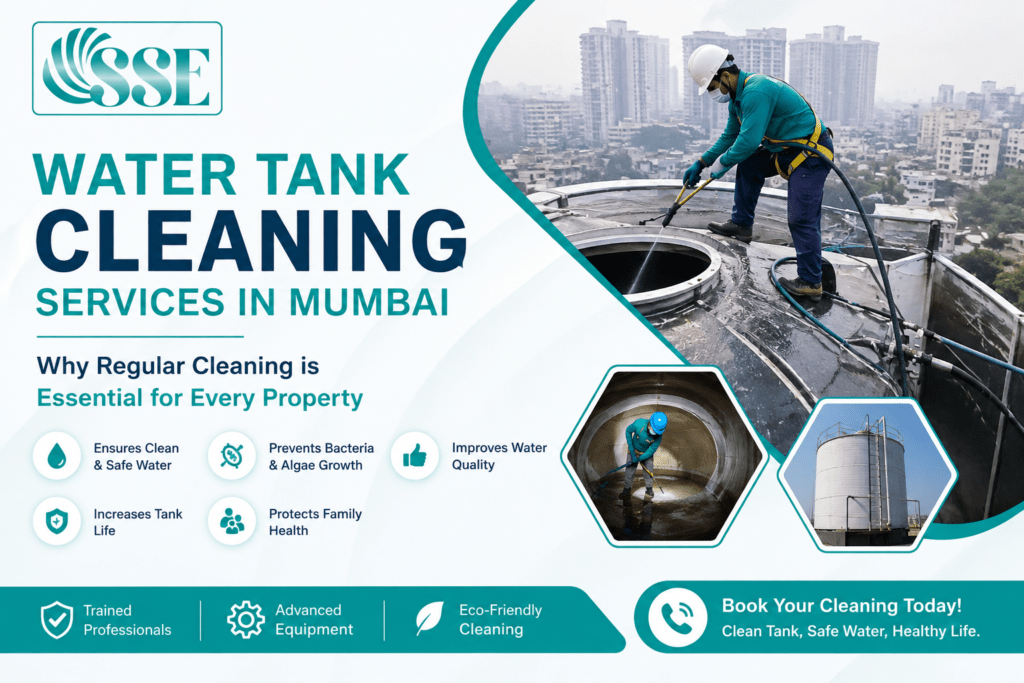
Industrial water tank cleaning is the process of removing dirt, sludge, biofilm, rust, algae, and harmful microorganisms from water storage tanks using professional cleaning equipment and approved sanitization methods. The goal is to ensure clean water storage, reliable operations, and long-term protection of the water distribution system.
Why Is Industrial Water Tank Cleaning Important?
1. Maintains Safe Water Quality
Over time, sediments and microbial growth can contaminate stored water. Routine cleaning helps keep water clean and suitable for industrial processes and daily operations.
2. Improves Safety
Dirty tanks can become breeding grounds for bacteria, algae, and biofilm. Professional cleaning reduces health risks for employees and helps maintain a hygienic workplace.
3. Supports Regulatory Compliance
Many industries must meet water quality, hygiene, and safety standards. Scheduled tank cleaning helps businesses stay prepared for audits and inspections.
4. Increases Operational Efficiency
Clean tanks improve water flow, reduce sediment buildup, and help connected equipment like pumps, boilers, and cooling systems operate more efficiently.
5. Reduces Maintenance Costs
Preventive cleaning removes deposits before they damage equipment, reducing repair costs and unexpected downtime.
Signs Your Industrial Water Tank Needs Cleaning
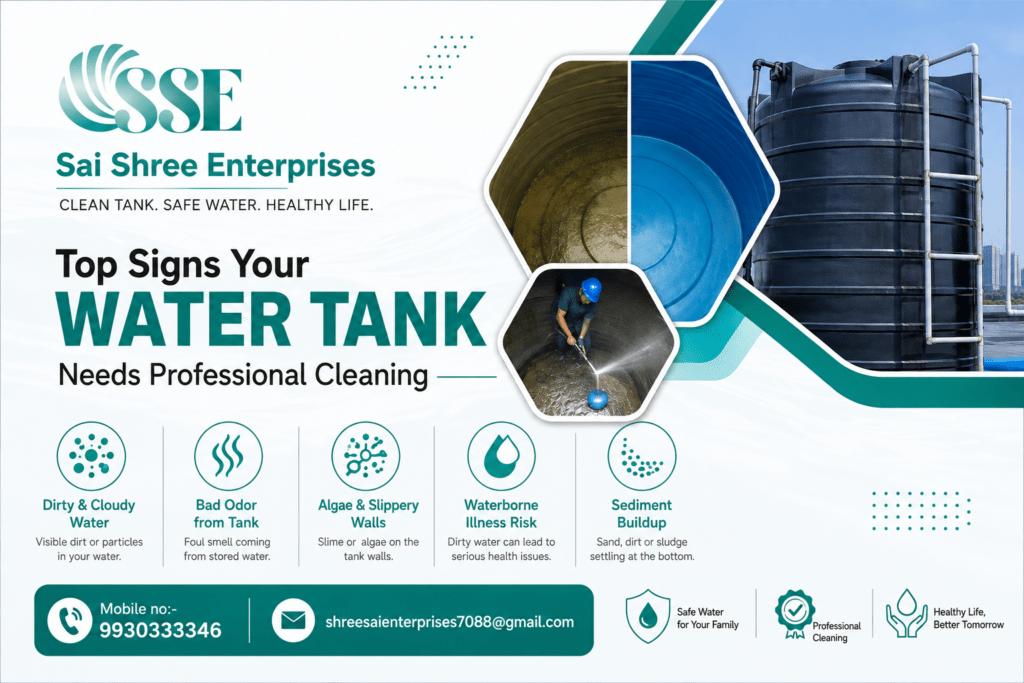
You should schedule professional cleaning if you notice:
- Dirty or discoloured water
- Bad odour from stored water
- Visible sludge or sediment
- Algae or biofilm formation
- Rust particles
- Reduced water pressure
- Frequent equipment issues
These signs indicate contamination that should be addressed promptly.
Professional Cleaning Process
A standard industrial water tank cleaning service typically includes:
- Tank inspection
- Water drainage
- Sludge and sediment removal
- High-pressure cleaning
- Disinfection and sanitization
- Final inspection
- Safe refilling of the tank
Professional cleaning ensures thorough removal of contaminants while following proper safety procedures.
Scheduled cleaning allows facility managers to:
Schedule maintenance during planned plant turnarounds or off-peak hours.
Optimize pump energy efficiency by maintaining smooth flow dynamics and clean strainers.
Identify minor structural defects, coating cracks, or liner damage before they escalate into structural failures.
Industries That Need Industrial Water Tank Cleaning
Regular cleaning is recommended for:
- Manufacturing plants
- Food processing units
- Pharmaceutical companies
- Chemical industries
- Hospitals
- Hotels
- Commercial buildings
- Warehouses
- Residential societies
Any facility that depends on stored water benefits from scheduled maintenance.
Discolored or Turbid Water: Yellowish, brownish, or cloudy water at discharge points.
Unusual Odors or Taste: Earthy, sulfurous, or metallic smells coming from process lines.
Reduced Water Pressure: Unexplained drops in pressure caused by clogged intake pipes or internal strainers.
Visible Sediment: Floating debris, scale flakes, or sludge in filtration units.
Failed Water Quality Tests: Elevated total dissolved solids (TDS) or positive microbial swabs.
Get the Best Offer
Welcome to Shree Sai Enterprises, your trusted partner for professional cleaning, maintenance, and sanitation services in Mumbai, Navi Mumbai, and Thane. With years of industry experience, we are committed to delivering high-quality, reliable, and affordable solutions for residential, commercial, and industrial spaces.
Frequently Asked Questions
Why is industrial water tank cleaning essential?
Industrial water tank cleaning removes sludge, bacteria, algae, and other contaminants that affect water quality, equipment performance, workplace safety, and regulatory compliance.
How often should industrial water tanks be cleaned?
Most industrial water tanks should be cleaned every 3–6 months, depending on water usage, contamination levels, and industry requirements.
What happens if industrial water tanks are not cleaned?
Neglected tanks can lead to contaminated water, equipment damage, higher maintenance costs, production issues, and compliance risks.
Recommended Cleaning Frequency & Best Practices
As a baseline standard, industrial water tanks should undergo visual inspection at least once every 6 months and complete drain, clean, and disinfection every 12 to 24 months, depending on water source quality and facility use.
Professional industrial cleaning crews follow strict confined-space safety protocols (OSHA 29 CFR 1910.146), utilizing specialized personal protective equipment (PPE), gas monitoring, high-pressure jetting, vacuum extraction, and EPA-approved biocides to restore tanks to pristine condition safely.
Conclusion
Industrial water tank cleaning is more than routine maintenance—it is an investment in safety, operational efficiency, and regulatory compliance. By scheduling regular professional cleaning, businesses can improve water quality, protect expensive equipment, reduce downtime, and create a healthier working environment. Whether you operate a manufacturing facility, hospital, hotel, or commercial building, keeping your water storage tanks clean ensures reliable performance and long-term cost savings.