Common Water Tank Contaminants and Their Health Risks
In this guide, we’ll explore Common Water Tank Contaminants and Their Health Risks, the problems they can cause, and how professional cleaning helps maintain a safe and hygienic water supply.
Clean water is essential for every aspect of daily life, from drinking and cooking to bathing and cleaning. While many homeowners and businesses invest in water purifiers, one critical part of the water supply system often goes unnoticed—the water storage tank.
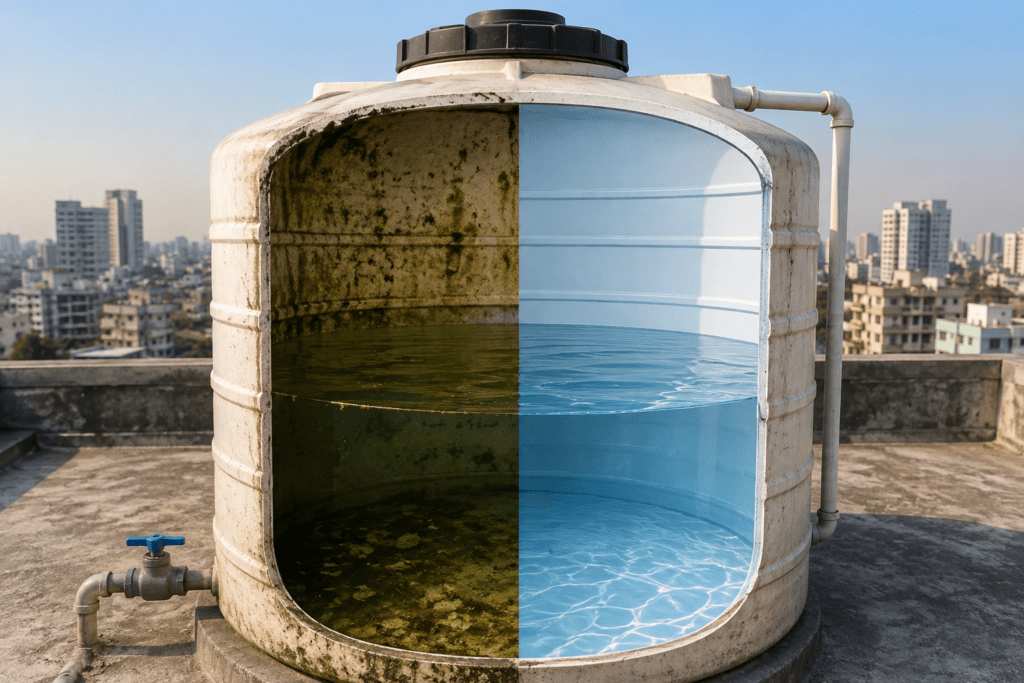
Whether it’s an overhead or underground tank, your water storage system can become contaminated over time if it isn’t cleaned and maintained regularly. Sediments, algae, bacteria, insects, rust, and other pollutants gradually accumulate inside the tank, affecting water quality and increasing potential health risks.
Because many contaminants are invisible to the naked eye, a tank may appear clean while still harboring harmful microorganisms. That’s why understanding common water tank contaminants and their health risks is essential for every property owner.
Why Do Water Tanks Become Contaminated?
Water storage tanks are continuously exposed to environmental and operational factors that contribute to contamination. Even treated municipal water can pick up impurities once it enters a storage tank.
Common reasons include:
- Natural sediment settling
- Dust entering through damaged lids
- Rust from aging tanks
- Algae growth due to sunlight exposure
- Standing water
- Insect and pest intrusion
- Poor maintenance
- Irregular cleaning schedules
Without periodic cleaning, these contaminants accumulate and gradually affect water quality.
1. Sediment and Sludge
Sediment is one of the most common contaminants found in water tanks. Tiny particles of sand, soil, rust, and minerals settle at the bottom of the tank over time, eventually forming a thick layer of sludge.
Health Risks
Although sediment itself isn’t always harmful, it creates an environment where bacteria and microorganisms can multiply. It may also affect the appearance and taste of water.
Warning Signs
- Cloudy water
- Particles settling in buckets
- Reduced water flow
- Dirty tank bottom
Regular professional cleaning removes sludge before it becomes a serious problem.
2. Bacteria
Bacteria can enter water tanks through contaminated water sources, damaged tank covers, or poor hygiene during maintenance.
Certain bacteria thrive in warm, stagnant water and can multiply rapidly inside an unclean tank.
Potential Health Risks
Exposure to contaminated water may contribute to:
- Stomach discomfort
- Digestive issues
- Waterborne infections
- Food contamination during cooking
Routine cleaning and disinfection help reduce bacterial contamination and improve overall water hygiene.
3. Algae Growth
Algae commonly develop in overhead water tanks exposed to sunlight. Even a small opening in the tank lid can allow enough light for algae to grow.
Why Algae Are a Problem
Although not all algae are harmful, their presence can:
- Affect water taste and odor
- Encourage bacterial growth
- Create slippery tank surfaces
- Reduce water quality
Proper sealing and regular cleaning help prevent algae formation.
4. Rust and Corrosion
Metal water tanks and aging pipelines often release rust particles into stored water.
Health and Maintenance Concerns
Rust can:
- Discolor water
- Affect taste
- Damage plumbing fixtures
- Indicate structural deterioration
During professional cleaning, technicians inspect tanks for corrosion and recommend repairs if necessary.
5. Dust, Dirt, and Debris
Outdoor water tanks are constantly exposed to environmental pollutants.
Dust, leaves, bird feathers, and airborne particles may enter the tank if the lid is damaged or improperly sealed.
Possible Effects
- Poor water appearance
- Sediment buildup
- Reduced hygiene
- Increased cleaning frequency
Keeping tank covers secure significantly reduces contamination.
6. Insects and Mosquitoes
An uncovered or damaged tank can become an entry point for insects and mosquitoes.
Besides contaminating the water, stagnant conditions may allow mosquitoes to breed inside the tank.
Risks
- Poor hygiene
- Increased contamination
- Water quality deterioration
Routine inspections help identify damaged covers before insects gain access.
7. Biofilm
Biofilm is a thin, slimy layer formed by microorganisms that attach themselves to the internal surfaces of a water tank.
Unlike ordinary dirt, biofilm protects bacteria from normal rinsing, making it difficult to remove without professional cleaning.
Why Biofilm Matters
Biofilm can:
- Shelter microorganisms
- Reduce water quality
- Cause persistent contamination
- Require specialized cleaning methods
Professional scrubbing and sanitization effectively remove biofilm buildup.
8. Fungi and Mold
Moist, poorly ventilated tanks can occasionally develop fungal or mold growth, especially if cleaning is neglected for long periods.
Possible Problems
- Unpleasant odors
- Reduced water quality
- Poor hygiene conditions
Regular maintenance helps prevent fungal growth inside storage tanks.
9. Organic Matter
Leaves, insects, bird droppings, and other organic materials sometimes enter water tanks through damaged openings.
As these materials decompose, they contribute to bacterial growth and unpleasant smells.
Common Signs
- Bad odor
- Cloudy water
- Floating debris
- Sludge formation
Professional cleaning removes both visible and hidden organic contamination.
10. Chemical Contaminants
Although less common, chemicals may enter water tanks through accidental contamination, nearby construction work, or improper storage practices.
Possible Sources
- Cleaning chemical residue
- Industrial pollutants
- Contaminated incoming water
- Poor maintenance practices
Using approved cleaning products and hiring trained professionals helps reduce these risks.
Common Water Tank Contaminants and Their Health Risks
A neglected water tank doesn’t just affect water quality—it can also impact the health of everyone using the stored water.
Potential risks include:
- Waterborne illnesses
- Digestive discomfort
- Skin irritation
- Allergic reactions
- Unpleasant taste and odor
- Reduced confidence in drinking water
- Contamination during cooking and food preparation
Children, elderly individuals, and people with weakened immune systems are particularly vulnerable to poor water quality.
How Professional Water Tank Cleaning Prevents Contamination
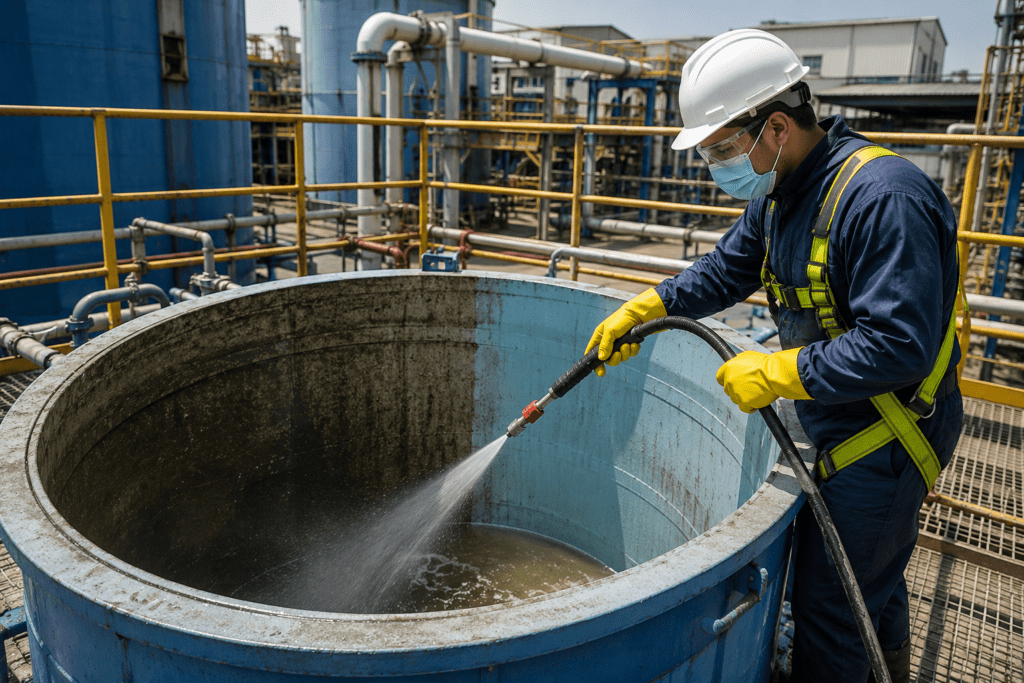
Professional cleaning services use specialized equipment and proven cleaning methods to remove contaminants effectively.
The cleaning process generally includes:
- Complete tank inspection
- Water drainage
- Sludge removal
- Manual scrubbing
- High-pressure jet cleaning
- Industrial vacuum cleaning
- Food-grade disinfection
- Final quality inspection
This comprehensive process helps restore hygienic storage conditions while improving water quality.
How Often Should a Water Tank Be Cleaned?
Although cleaning frequency depends on usage and environmental conditions, most experts recommend cleaning water storage tanks every six months.
Properties with higher water consumption, including hotels, hospitals, restaurants, housing societies, and industrial facilities, may require more frequent maintenance.
Tips to Prevent Water Tank Contamination
Keeping your water tank clean between professional services is easier with a few preventive measures:
- Keep the tank lid tightly closed.
- Inspect the tank regularly for damage.
- Repair cracks immediately.
- Prevent direct sunlight from entering.
- Remove nearby debris and vegetation.
- Schedule professional cleaning every six months.
Preventive maintenance significantly reduces the risk of contamination.
Get the Best Offer

Welcome to Shree Sai Enterprises, your trusted partner for professional cleaning, maintenance, and sanitation services in Mumbai, Navi Mumbai, and Thane. With years of industry experience, we are committed to delivering high-quality, reliable, and affordable solutions for residential, commercial, and industrial spaces.
Our Client











You can check our client review on official link Click Here!
Frequently Asked Questions
What are the most common water tank contaminants?
The most common contaminants include sediment, sludge, bacteria, algae, rust, insects, biofilm, fungi, organic matter, and dust.
Can contaminated water tanks affect health?
Yes. Poorly maintained water tanks can compromise water quality and may contribute to hygiene issues and waterborne illnesses.
How can I prevent water tank contamination?
Regular professional cleaning, secure tank covers, routine inspections, and timely repairs help maintain cleaner and safer water.
How often should water tanks be professionally cleaned?
Most residential and commercial properties should schedule professional cleaning every six months, although heavily used facilities may require more frequent maintenance.
Final Thoughts :
Your water storage tank is the final stop before water reaches your taps, making its cleanliness just as important as the quality of the incoming water supply. Over time, contaminants such as sediment, bacteria, algae, rust, insects, and biofilm can accumulate, reducing water quality and increasing health risks.
Understanding the common water tank contaminants and their health risks allows property owners to take preventive action before contamination becomes a serious problem. Regular inspections, proper maintenance, and professional water tank cleaning are the most effective ways to ensure a safe, hygienic, and reliable water supply.
Whether you own a home, apartment, commercial building, hotel, hospital, school, or industrial facility, investing in routine professional water tank cleaning is an important step toward protecting your health and maintaining clean water for everyone who depends on it.