Industrial vs Residential Water Tank Cleaning: What's the Difference?
Understanding the difference between industrial vs residential water tank cleaning helps property owners, facility managers, and business operators choose the right cleaning schedule and service provider.
Water storage tanks are a vital part of every property, whether it’s a family home, an apartment complex, a manufacturing plant, or a large industrial facility. While both residential and industrial water tanks serve the same purpose—storing clean water—they differ significantly in size, usage, maintenance requirements, and cleaning methods.
Many people assume that cleaning a residential water tank and an industrial water tank involves the same process. In reality, industrial tanks require specialized equipment, trained professionals, and strict safety procedures due to their size, complexity, and the nature of industrial operations.
In this guide, we’ll explore how these two types of water tank cleaning differ, why each requires a unique approach, and why professional maintenance is essential for both.
What Is Residential Water Tank Cleaning?
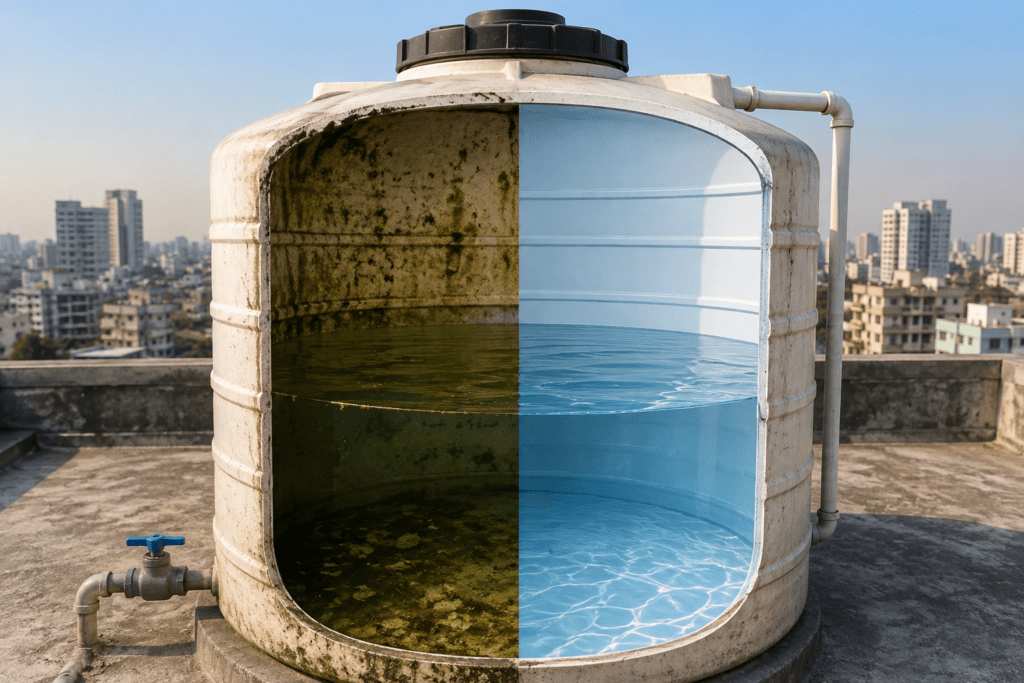
Residential water tank cleaning involves removing dirt, sediment, algae, bacteria, and other contaminants from water storage tanks used in homes, apartments, villas, and housing societies.
These tanks generally store water used for:
- Drinking
- Cooking
- Bathing
- Washing clothes
- Cleaning
- Daily household activities
Residential tanks are typically smaller and are located either on rooftops (overhead tanks) or below ground (underground tanks).
The primary goal of residential tank cleaning is to maintain clean and hygienic water for household use.
What Is Industrial Water Tank Cleaning?
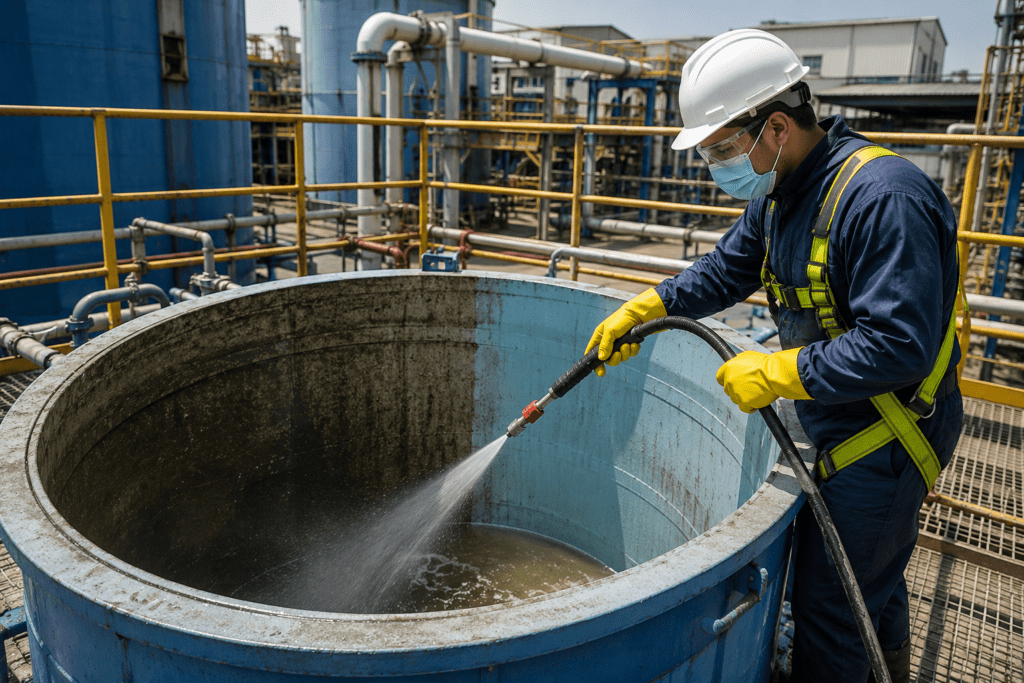
Industrial water tank cleaning is a specialized service designed for factories, warehouses, manufacturing plants, pharmaceutical facilities, food processing units, chemical industries, logistics centers, and other industrial establishments.
Industrial tanks may store:
- Process water
- Utility water
- Cooling water
- Fire reserve water
- Domestic water for staff
- Treated water
These tanks are usually much larger than residential tanks and require advanced cleaning techniques, specialized equipment, and experienced technicians.
Industrial vs Residential Water Tank Cleaning: Key Differences
| Feature | Residential Water Tank Cleaning | Industrial Water Tank Cleaning |
|---|---|---|
| Purpose | Household water supply | Industrial operations and facility water systems |
| Tank Size | Small to medium | Medium to very large |
| Water Usage | Domestic use | Industrial, commercial, and operational use |
| Cleaning Equipment | Pressure jet, vacuum, scrubbing | Industrial vacuum systems, mechanized cleaning equipment, high-capacity pumps |
| Cleaning Complexity | Moderate | High |
| Safety Requirements | Standard safety measures | Strict industrial safety protocols and confined-space procedures where applicable |
| Cleaning Frequency | Usually every 6 months | Depends on usage, regulations, and operational requirements |
| Downtime Planning | Minimal | Often coordinated to avoid production disruption |
Why Residential Water Tanks Need Regular Cleaning
Even if your home receives treated municipal water, contaminants gradually build up inside storage tanks.
Common residential contaminants include:
- Dust
- Sediment
- Rust particles
- Algae
- Bacteria
- Insects
- Organic matter
Without routine maintenance, these contaminants can affect water quality and increase the likelihood of plumbing issues.
Professional residential cleaning helps ensure clean water for everyday household use.
Why Industrial Water Tanks Require Specialized Cleaning
Industrial facilities operate under much more demanding conditions than residential properties.
Industrial water tanks often experience:
- Heavy water consumption
- Continuous usage
- Larger sediment volumes
- Operational residue
- Complex piping systems
- Large-capacity storage
Cleaning these systems requires careful planning to minimize production downtime while maintaining workplace safety.
Cleaning Process: Residential vs Industrial
Residential Water Tank Cleaning
A typical residential cleaning process includes:
- Draining the remaining water
- Removing sludge and sediments
- Manual scrubbing of tank walls
- High-pressure jet cleaning
- Food-grade disinfection
- Final inspection before refilling
The process is generally completed within a few hours, depending on tank size.
Industrial Water Tank Cleaning
Industrial cleaning is more comprehensive and may include:
- Site inspection and risk assessment
- Water isolation procedures
- Industrial sludge extraction
- High-capacity vacuum cleaning
- Mechanized scrubbing
- High-pressure jetting
- Sanitization where appropriate
- Structural inspection
- Safe disposal of waste
- Operational testing before restarting the system
Large industrial tanks may require scheduled shutdowns and specialized access equipment.
Equipment Used
Residential Cleaning Equipment
Professional residential services typically use:
- High-pressure jet machines
- Wet and dry vacuum cleaners
- Scrubbing brushes
- Food-grade disinfectants
- Water pumps
Industrial Cleaning Equipment
Industrial cleaning companies rely on advanced equipment such as:
- Industrial vacuum systems
- High-capacity sludge removal pumps
- Ride-on cleaning equipment (where applicable)
- High-pressure water jetting systems
- Mechanized cleaning tools
- Industrial safety equipment
- Confined-space entry gear (if required)
The equipment selected depends on the tank’s size, configuration, and operational environment.
Cleaning Frequency
Residential Properties
Most homes, apartments, and housing societies should schedule professional water tank cleaning every six months.
Industrial Facilities
Industrial cleaning frequency varies depending on:
- Industry type
- Water usage
- Regulatory requirements
- Production processes
- Water source
- Tank capacity
Some industries require quarterly maintenance, while others follow customized preventive maintenance schedules.
Safety Considerations
Residential tank cleaning focuses primarily on water hygiene and safe handling of cleaning chemicals.
Industrial cleaning involves additional safety measures, including:
- Confined-space procedures
- Lockout and isolation protocols
- Personal protective equipment (PPE)
- Hazard assessments
- Equipment safety checks
- Trained industrial technicians
Safety planning is a critical part of industrial water tank maintenance.
Benefits of Professional Water Tank Cleaning
Whether residential or industrial, professional cleaning offers numerous benefits.
Residential Benefits
- Cleaner water
- Improved household hygiene
- Better water taste and clarity
- Reduced plumbing issues
- Longer tank lifespan
- Early detection of leaks and damage
Industrial Benefits
- Improved operational efficiency
- Cleaner water systems
- Reduced equipment maintenance
- Better workplace hygiene
- Longer infrastructure lifespan
- Safer working environments
- Minimized downtime through planned maintenance
How to Choose the Right Service Provider
When selecting a water tank cleaning company, consider:
- Industry experience
- Trained technicians
- Modern cleaning equipment
- Safe cleaning practices
- Transparent pricing
- Flexible scheduling
- Positive customer reviews
- Ability to handle tanks of different sizes
Industrial facilities should also ensure that the service provider follows appropriate workplace safety procedures and can manage large-scale cleaning projects.
Final Thoughts:
Although residential and industrial water tanks both store water, their maintenance requirements are very different. Residential tanks are designed to provide clean water for everyday household use, while industrial tanks support large-scale operations and often require more advanced cleaning methods, specialized equipment, and comprehensive safety planning.
Understanding the differences between industrial vs residential water tank cleaning allows property owners and facility managers to implement the right maintenance strategy for their specific needs.
Whether you’re responsible for a family home, apartment complex, warehouse, manufacturing plant, hotel, hospital, or industrial facility, regular professional water tank cleaning is essential for protecting water quality, improving system performance, and extending the lifespan of your storage infrastructure.
Get the Best Offer
Welcome to Shree Sai Enterprises, your trusted partner for professional cleaning, maintenance, and sanitation services in Mumbai, Navi Mumbai, and Thane. With years of industry experience, we are committed to delivering high-quality, reliable, and affordable solutions for residential, commercial, and industrial spaces.
Our Client










You can check our client review on official link Click Here!
Frequently Asked Questions
What is the difference between industrial and residential water tank cleaning?
Residential cleaning focuses on maintaining safe household water, while industrial cleaning involves larger storage systems, specialized equipment, operational planning, and enhanced safety procedures.
How often should residential water tanks be cleaned?
Most residential water tanks should be professionally cleaned every six months.
Do industrial water tanks require more specialized equipment?
Yes. Industrial tanks are generally larger and often require high-capacity vacuum systems, mechanized cleaning equipment, and advanced safety procedures.
Is professional water tank cleaning worth it?
Absolutely. Professional cleaning improves water quality, removes harmful contaminants, extends the life of the tank, and helps maintain efficient water systems in both residential and industrial settings.