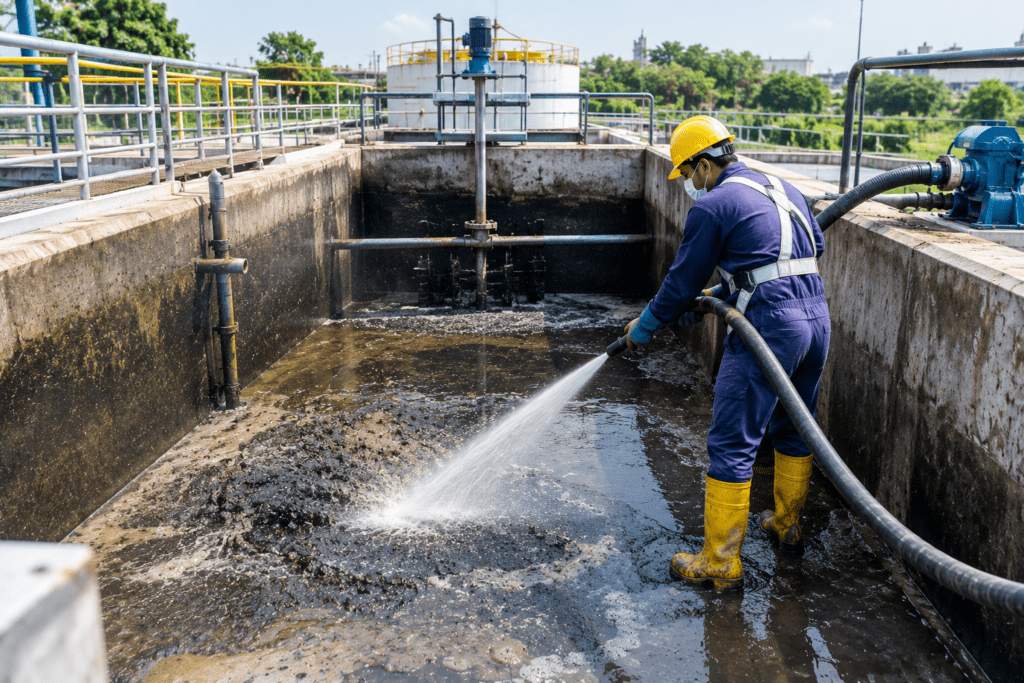
STP Plant Maintenance
Signs Your STP Plant Needs Maintenance
A Sewage Treatment Plant (STP) plays a crucial role in treating wastewater from residential societies, factories, hotels, hospitals, offices, and commercial properties. Like any other system, an STP requires regular inspection and maintenance to function correctly.
Many STP problems do not occur suddenly; the plant often exhibits early warning signs such as foul odors, excessive sludge, overflows, unusual noises, poor water quality, or recurring blockages.
Recognizing these signs early allows you to arrange for maintenance before a minor issue escalates into a major operational problem.
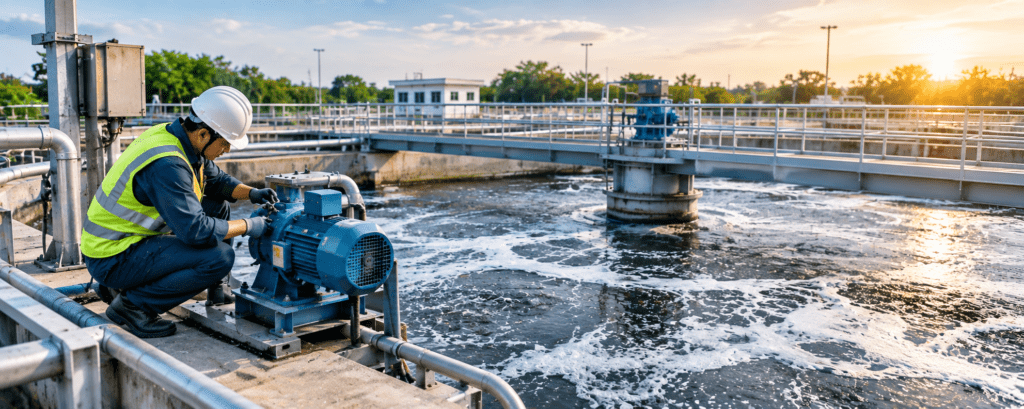
Why Is STP Plant Maintenance Important?
An STP consists of multiple processes and components that work together to treat wastewater. Issues such as sludge accumulation, blockages, equipment malfunctions, or poor operating conditions can affect the overall treatment process.
Regular maintenance helps in early problem detection, maintaining cleaner operating conditions, and reducing the likelihood of unexpected breakdowns.
7 Signs Your STP Plant Needs Maintenance
- Strong or Unusual Foul Odor
A persistent foul odor around the STP may indicate accumulated sludge, stagnant wastewater, poor aeration, or other operational issues. If the odor persists even after basic cleaning, the plant should be inspected to determine the root cause. - Excessive Sludge Buildup
While sludge is a normal byproduct of wastewater treatment, excessive accumulation can become problematic. Excessive sludge reduces available tank capacity and can disrupt normal plant operations; therefore, regular monitoring and appropriate sludge removal are essential. - STP Overflow
Overflow is a sign that should not be ignored. It can result from excessive sludge, blockages, pump malfunctions, high inflow, or other system issues. Simply clearing the overflow does not resolve the underlying problem; a professional inspection is required to identify the actual cause. - Slow Wastewater Flow
If wastewater moves more slowly than usual, there may be a blockage or buildup somewhere in the system—such as in pipelines, chambers, screens, or other components. Early inspection can help prevent the issue from escalating. - Poor Treated Water Quality
Changes in the appearance, odor, or other observable characteristics of treated water may indicate that the treatment process is not functioning as expected. However, visual appearance alone cannot confirm treatment performance; proper water quality testing should be conducted where necessary. - Unusual Pump or Equipment Noise
Pumps, blowers, and other mechanical equipment are vital components of many STP systems. Unusual vibrations, noise, overheating, or repeated equipment trips indicate a need for maintenance. Ignoring these warning signs increases the risk of equipment failure. - Frequent Blockages or Repeated Complaints
If issues such as blockages, odors, or overflows recur, temporary cleaning measures may prove insufficient. Recurring problems often indicate that the system requires a comprehensive inspection and a proper maintenance plan.
What Can Cause STP Problems?
Problems can arise in an STP for various reasons, including:
- Excessive sludge accumulation
- Blocked pipelines
- Improper aeration
- Pump or blower issues
- Screen blockage
- Irregular maintenance
- Changes in wastewater flow
- Improper operation
- Mechanical wear
- Poor housekeeping around the plant
The appropriate solution depends on the specific STP design and the actual condition of the system.
What Does STP Maintenance Usually Include?
STP maintenance can involve various tasks depending on the specific plant and its operational requirements. Common maintenance activities may include:
- Tank inspection
- Sludge monitoring and removal
- Cleaning of screens and chambers
- Pipeline inspection
- Pump inspection
- Checks on blowers and aeration systems
- Cleaning of accumulated deposits
- Checking for leaks or blockages
- Equipment servicing
- Water quality monitoring, where necessary
Not every STP requires the same maintenance procedure; a site-specific approach is more effective than using a standard checklist for every plant.
How Often Should an STP Be Maintained?
There is no universal maintenance schedule for every STP. The frequency depends on the following factors:
- Plant capacity
- Daily wastewater volume
- Type of wastewater
- Sludge generation
- Equipment condition
- Plant design
- Operating hours
- Previous maintenance history
- Manufacturer recommendations
Routine inspections should be combined with planned maintenance so that problems can be identified before they escalate into emergencies.
STP Maintenance vs STP Tank Cleaning
These two services are related but not exactly the same.
STP tank cleaning primarily focuses on removing accumulated sludge, deposits, and waste from the relevant areas of the tank.
STP maintenance is broader in scope and may include inspections, equipment checks, cleaning, sludge management, pipeline inspections, and other activities necessary for the proper operation of the plant.
If your STP is facing both heavy sludge buildup and equipment-related issues, cleaning alone cannot resolve the entire problem.
What Happens If STP Maintenance Is Ignored?
Ignoring warning signs can cause minor problems to become more complex and costly to resolve. Possible consequences include:
- More frequent blockages
- Increasingly foul odors
- Overflow issues
- Reduced system efficiency
- Equipment breakdown
- High maintenance requirements
- Unpleasant conditions around the plant
- Major operational disruptions
Regular inspections can help detect problems before they escalate into major failures.
Who Needs STP Plant Maintenance?
STP maintenance is important for the following types of properties:
- Residential societies
- Factories
- Manufacturing units
- Hotels
- Hospitals
- Offices
- Schools and colleges
- Warehouses
- Commercial buildings
- Industrial facilities
Any property operating an STP should follow suitable maintenance and monitoring practices based on its system requirements.
How to Choose an STP Maintenance Service in Mumbai?
Consider the following before hiring a service provider:
- Experience with similar STP systems
- Availability of suitable equipment
- Proper safety practices
- Ability to handle sludge and wastewater-related work
- Clear explanation of the required service
- Proper inspection before commencing major work
- Ability to minimize disruption to your facility
A reliable service provider should first understand the problem rather than immediately recommending unnecessary work.
Get the Best Offer
Welcome to Shree Sai Enterprises, your trusted partner for professional cleaning, maintenance, and sanitation services in Mumbai, Navi Mumbai, and Thane. With years of industry experience, we are committed to delivering high-quality, reliable, and affordable solutions for residential, commercial, and industrial spaces.
Our Client











You can check our client review on official link Click Here!
Frequently Asked Questions
Which is more difficult to clean—an underground or overhead water tank?
Underground water tanks are generally more challenging because they accumulate heavy sludge and require specialized equipment for cleaning.
Can both tanks be cleaned on the same day?
Yes. Professional cleaning companies often clean underground and overhead tanks during the same service visit, minimizing disruption.
How often should underground and overhead tanks be cleaned?
Most residential and commercial properties should clean both tanks every six months, although facilities with high water usage may require more frequent maintenance.
Why is professional water tank cleaning recommended?
Professional technicians use advanced equipment and approved disinfectants to remove contaminants thoroughly, ensuring safer and cleaner stored water.